


The Standards Series — Structured self-leadership
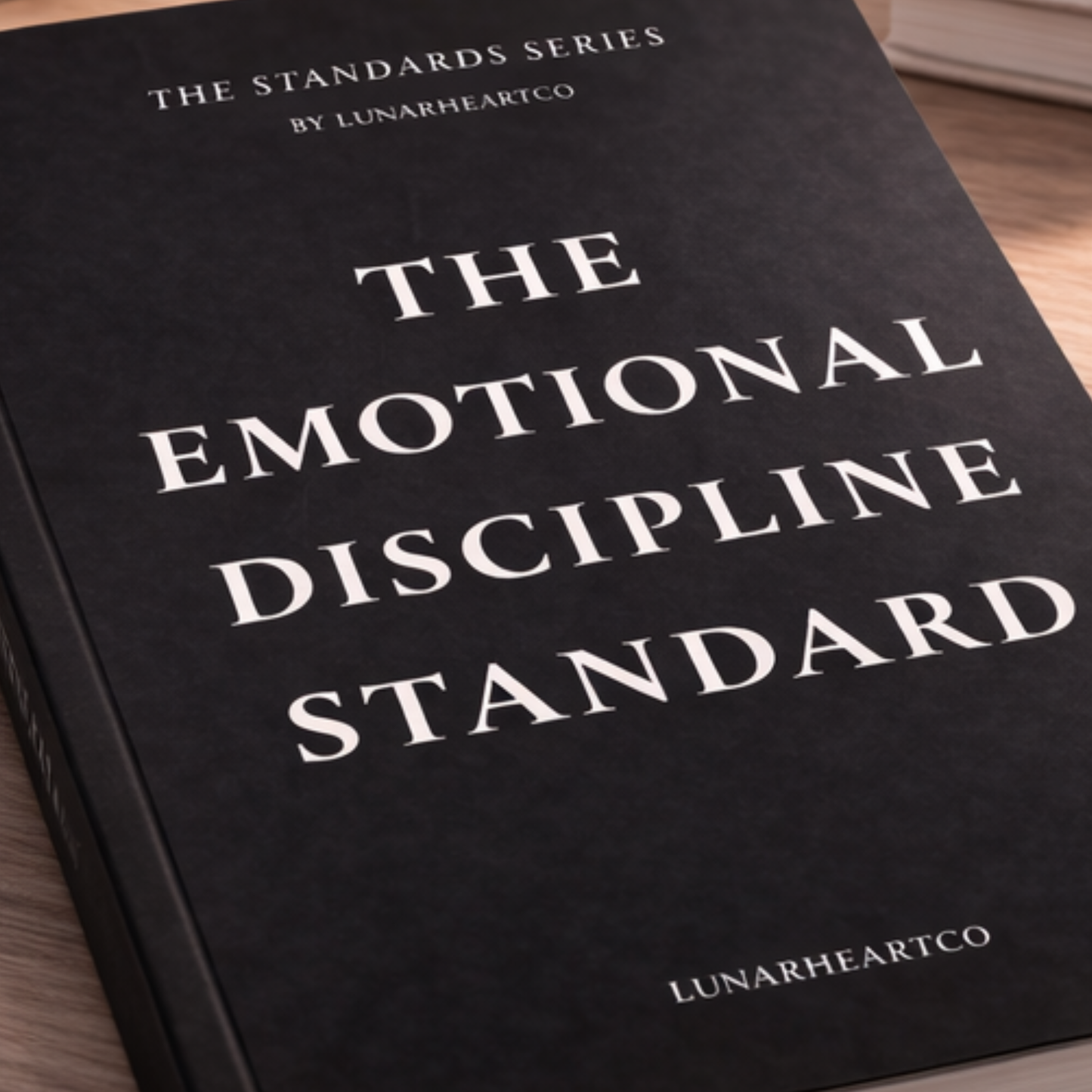
The Emotional Discipline Standard — Stop Reacting. Start Leading.
A structured behavioural system designed to stabilise emotional response, regulate reactions, and maintain composure under pressure without impulsivity, escalation, or withdrawal.
Regular price
£15.90 GBP
Regular price
Sale price
£15.90 GBP
Estimated delivery
Calculated at checkout
Tracked delivery · Complimentary on orders over £50 · Timing varies by destination.
Secure payment options
- Structured behavioural frameworks for practical use
- Digital or professionally printed perfect-bound editions
- Protected delivery for printed editions
What this is
You do not control emotion by suppressing it.
You control it by governing behaviour.
Emotion is not the problem.
Your response is.
Most people do not lack awareness.
They lack control in the moment.
The Emotional Discipline Standard™ is designed to create behavioural stability through emotional regulation, structured response, and enforceable self-control.
This is not emotional processing.
This is behavioural control.
You control it by governing behaviour.
Emotion is not the problem.
Your response is.
Most people do not lack awareness.
They lack control in the moment.
The Emotional Discipline Standard™ is designed to create behavioural stability through emotional regulation, structured response, and enforceable self-control.
This is not emotional processing.
This is behavioural control.
The framework
Part I — See It
You identify where emotional intensity overrides behaviour.
You track triggers, urgency, and instability patterns.
Part II — Own It
You take responsibility for your reactions.
You examine escalation, withdrawal, and loss of control.
Part III — Raise The Standard
You define response rules.
You install delay protocols and behavioural containment systems.
Part IV — Live It
You apply discipline in real situations.
You track behaviour, reset patterns, and reinforce control.
You identify where emotional intensity overrides behaviour.
You track triggers, urgency, and instability patterns.
Part II — Own It
You take responsibility for your reactions.
You examine escalation, withdrawal, and loss of control.
Part III — Raise The Standard
You define response rules.
You install delay protocols and behavioural containment systems.
Part IV — Live It
You apply discipline in real situations.
You track behaviour, reset patterns, and reinforce control.
What you build
Emotional regulation systems
Response discipline
Trigger awareness
Behavioural control frameworks
Consistent composure under pressure
Response discipline
Trigger awareness
Behavioural control frameworks
Consistent composure under pressure
How to use it
Move through it sequentially
Write with precision, not expression
Apply in real situations
Review and refine monthly
Contain first. Respond second.
Write with precision, not expression
Apply in real situations
Review and refine monthly
Contain first. Respond second.
Choose your edition
Digital Edition
Instant access after purchase
Structured PDF (7×10 format)
Digital and print-ready versions
Designed for repeated use
Printed Edition (Perfect-Bound)
7×10 professional format
Matte cover
Clean, structured interior
Designed as a long-term reference system
Printed on demand and shipped worldwide
Both editions contain the same behavioural framework and written structure.
Instant access after purchase
Structured PDF (7×10 format)
Digital and print-ready versions
Designed for repeated use
Printed Edition (Perfect-Bound)
7×10 professional format
Matte cover
Clean, structured interior
Designed as a long-term reference system
Printed on demand and shipped worldwide
Both editions contain the same behavioural framework and written structure.
Important
This is not a journaling product.
It is a system for behavioural control.
It is a system for behavioural control.
Delivery & access
Fully digital editions are available after checkout. Printed editions are made to order and normally dispatched within 2–5 business days. Orders over £50 receive complimentary shipping. Damaged or defective printed items are replaced at no additional cost.


Digital Workbook
£15.90 GBP